I’d been thinking for a couple of days about what to write. I thought about writing about why EDONISMO, about hospitality, even about myself. But honestly, none of it particularly appealed to me.
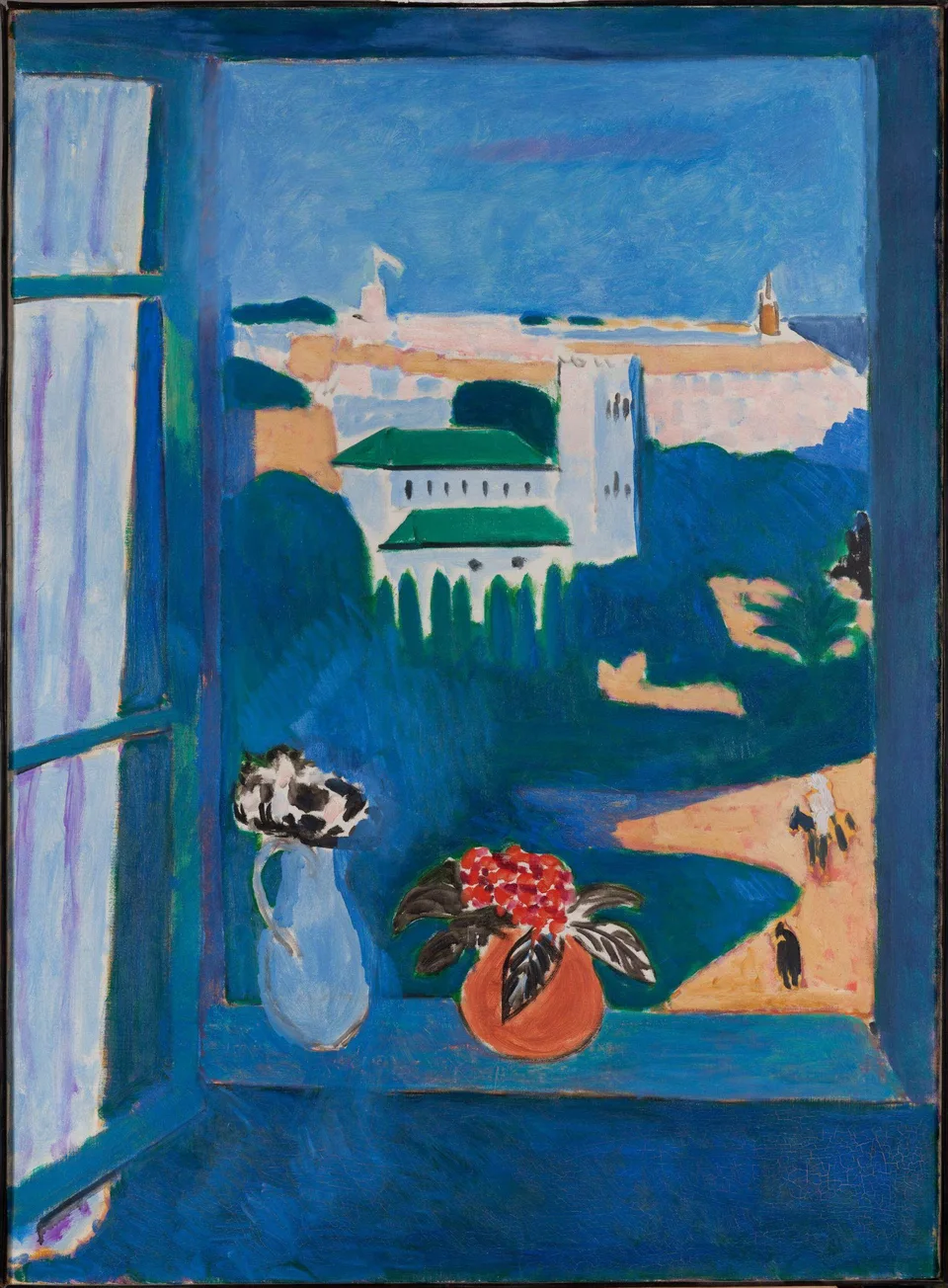
Then, a few days ago, I was watching a documentary about Matisse. They were talking about his travels through southern Spain and how they had influenced his painting and, more generally, the way he saw things: the light, the colours, the shapes, the landscape... And it got me thinking about how different the experience of travelling must have been back then.
Just over a hundred years ago, travelling to a neighbouring country, even a relatively short distance away, could mean encountering something completely different. And you arrived without having already seen thousands of photographs, videos, reels, rankings and recommendations about what you were going to find. There were so many things you simply had never seen before. You didn’t even really know what to expect. And that’s when I started writing this.
Travelling is still one of my favourite things. I think it opens your mind and helps you understand the world from different points of view. China, India, Indonesia, Africa, South America... There are so many places that can make you look differently at politics, religion, society, customs, or even fairly ordinary things you had always taken for granted. But travelling has changed too.
“It has never been easier to travel 10,000 kilometres without really leaving our own bubble.”
What do I mean by that? You can fly all the way to Bali, have the same matcha you could be drinking in Madrid, go to the infinity pool you’ve been seeing on Instagram for months, visit the temple you saw on YouTube, book the restaurant three of your friends have already been to, and end the day in your hotel room watching the next episode of the same wonderful Netflix series you were watching at home. You’ve travelled halfway around the world. But I’m not sure how much you’ve actually travelled.
Because the way we approach travel has changed too. Quite often, we no longer arrive somewhere to discover what’s there. We arrive looking for exactly what we already know is there. We don’t go out for dinner to see what we find. We land with a list of restaurants already saved. And that makes me think that travelling is also an attitude.
Because exactly the opposite can happen without ever getting on a plane. You can leave your house, take the metro and, ten stops later, find yourself surrounded by another community, another cuisine, another religion and another way of understanding life. And because you probably haven’t spent three months watching videos about what you’re going to find there, it might even surprise you more.
There can be more cultural distance between two neighbourhoods in the same city than between Madrid and some of those international destinations designed to welcome the same global visitor. And just to be clear, this isn’t a criticism of those destinations. They can be incredible places. But 10,000 kilometres. Ten metro stops. Distance alone doesn’t guarantee discovery.
But there’s another part of all this that interests me even more. It’s not just that we can travel thousands of kilometres without fully leaving our own bubble. It’s also that the places we travel to are starting to look more and more alike.
We see the same brands, the same fashion and hear the same music in practically every major city in the world. You get into a taxi thousands of kilometres from home and the same song is playing. You walk out of your hotel and there’s a Starbucks across the street. In any major city, you can eat pretty much any cuisine in the world. But we already know all this. I’m not exactly breaking new ground here. It’s globalisation.
What interests me more is something else: I think we’ve even managed to homogenise the way we try to be different. Or appear to be. What do I mean?
You find independent cafés thousands of kilometres apart that somehow look the same. Hotels talk about authenticity and promise unique experiences while using practically the same codes. Restaurants celebrate what’s local while following the same international trends. Houses, hotels, apartments... everything is becoming more neutral, more beige, able to work just as easily in Madrid, Dubai, New York or Singapore.
“Even authenticity seems to have developed a recognisable aesthetic.”
I’m not sure if you can see where I’m going with this. I might even have to ask myself. Anyway, let’s keep exploring.
In Madrid, for example, traditional neighbourhood bars have been disappearing for years. Some were beautiful, some ugly, some uncomfortable and some wonderful. They were what they were. And now we open new bars designed to look authentically old. It’s quite absurd when you think about it: closing a bar that had spent fifty years growing old, only to open another one designed from day one to look as though it had been there for fifty years.
And I’m not saying the answer is to freeze cities in time either. Or that a Spanish restaurant has to look like a 1920s tavern with legs of ham hanging from the ceiling. Or that a hotel in Japan has to conform to a foreigner’s idea of what Japan should look like. Cultures change. Cities change. We change. The world evolves.
So I wonder: how do we let something change without it eventually losing what made it its own?
In hospitality, we constantly talk about authenticity, experiences and identity. But can a hotel genuinely feel part of the place it’s in without having to dress up as “local”? I hope so.
At what point do we stop taking inspiration and simply start looking too much like one another? This interests me.
And perhaps that’s why I’m increasingly drawn to things that only really make sense where they are. A restaurant, a hotel, a bar, a shop, a house... Places that, for whatever reason, just wouldn’t work quite the same way anywhere else. Maybe what attracts me to them isn’t that they’re traditional. Or even that they’re original. There’s simply something about them that makes sense precisely there, where they are. And I like that, even if I can’t always explain exactly what it is.
And while I was thinking about the personality of places, I realised that perhaps something quite similar happens to us.
We like people with character, places with personality, things that are different. But then we dress like the people around us, travel to the places our friends have travelled to, go to the same restaurants and follow pretty much the same trends. I suppose that’s normal. Although I’m not sure that something being normal necessarily makes it good.
We all want, to a greater or lesser extent, to feel part of something.
And that brings me to another contradiction that interests me: having a personality means accepting that not everyone is going to like you. That applies to a person, but also to a restaurant, a hotel, a brand or even an opinion. And that can be uncomfortable.
Because while we talk endlessly about identity, authenticity, character and differentiation, we often build places, products and, yes, even our own image while trying to avoid anything that might put someone off. So it seems we want to be different, but not too different. We want to have a personality and, at the same time, be accepted by everyone. I don’t know. At a certain point, I find those things quite difficult to reconcile.
I started this article thinking about how different it must have been for Matisse to arrive in southern Spain more than a hundred years ago, and I’ve ended up rambling about authenticity, identity and what it really means to discover something today. And I’m left with one question:
“To what extent can we really be different if we all follow the same paths?”
I don’t think I’ve answered many questions. I think I’ve opened up quite a few more. Maybe that’s the point. And in the meantime, let’s at least try not to make everything the same shade of beige